

We are living in challenging times. On one side, the world is facing rapid population growth and increasing food demand. On the other side, climate change, soil degradation, biodiversity loss, water pollution, and ecosystem decline are threatening the foundation of agriculture itself.
For decades, agriculture has depended heavily on chemical fertilizers and pesticides to increase food production. These inputs helped raise crop yields, but their excessive and unbalanced use has slowly damaged soil health, reduced microbial life, polluted water bodies, and made farming systems more dependent on external inputs.
Today, the question is no longer only how to produce more food. The real question is: how can we produce food sustainably while restoring the soil that feeds us?
One of the strongest answers lies beneath our feet — in the invisible world of soil bacteria and beneficial microorganisms.
Soil Is Alive
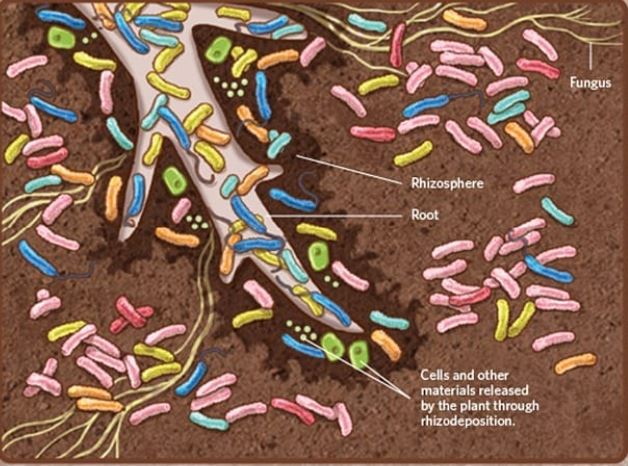
Soil is not just dust, sand, clay, and minerals. Healthy soil is a living ecosystem. It contains billions of bacteria, fungi, actinomycetes, protozoa, and other microorganisms that support plant growth.
These microorganisms live around plant roots in a special zone called the rhizosphere. The rhizosphere is the area surrounding plant roots where roots and microbes interact closely. Plants release sugars, amino acids, and organic compounds through their roots. In return, beneficial microbes help plants access nutrients, improve root growth, protect against disease, and tolerate stress.
This relationship is one of nature’s most powerful agricultural systems.
When soil is rich in beneficial microbes, plants grow better naturally. But when soil is damaged by excessive chemical use, erosion, low organic matter, and poor land management, this microbial balance is disturbed.
The Problem with Overuse of Chemical Fertilizers
Chemical fertilizers are not bad when used properly. The problem begins when they are used continuously, excessively, and without organic matter or microbial support.
Overuse of chemical fertilizers can reduce soil organic carbon, disturb beneficial microbial populations, and weaken natural nutrient cycling. When soil microbes decline, nutrients become less available to plants. Farmers then need to apply more fertilizers to maintain production. This creates a cycle of dependency.
Excess fertilizers can also leach into rivers, ponds, and groundwater. Nutrient pollution can cause algal blooms, reduce oxygen in water, and damage aquatic life. Some chemical inputs may also carry heavy metals or residues that affect soil quality and food safety.
In the long term, agriculture cannot survive by feeding crops while starving the soil.
Biofertilizer: A Natural Solution
Biofertilizers are agricultural inputs made from living beneficial microorganisms. These microbes support plant growth by improving nutrient availability, enhancing root development, increasing stress tolerance, and restoring soil biology.
Unlike chemical fertilizers, biofertilizers do not only supply nutrients directly. They activate natural processes in the soil.
Biofertilizers may contain different groups of helpful microorganisms, such as:
- Nitrogen-fixing bacteria
- Phosphorus-solubilizing bacteria
- Potassium-mobilizing bacteria
- Plant-growth-promoting rhizobacteria
- Mycorrhizal fungi
- Decomposer microbes
- Native agriculturally beneficial microbial consortia
These microorganisms help rebuild the biological strength of soil.
The future of agriculture is not only in factories and chemical bags; it is in the living bacteria, fungi, and microbes that make soil fertile again.
How Biofertilizers Help Plants Grow
1. Nitrogen Fixation
Nitrogen is essential for plant growth. It is a major component of proteins, enzymes, chlorophyll, DNA, and RNA. Although the atmosphere contains a large amount of nitrogen, plants cannot directly use atmospheric nitrogen in its natural form.
Nitrogen-fixing bacteria convert atmospheric nitrogen into forms that plants can absorb. Examples include Rhizobium, which lives in root nodules of legume crops, and free-living bacteria such as Azotobacter.
This natural process reduces the need for synthetic nitrogen fertilizers.
2. Phosphorus Solubilization
Phosphorus is essential for root growth, flowering, seed formation, and energy transfer in plants. However, much of the phosphorus in soil becomes fixed and unavailable to crops.
Phosphorus-solubilizing microbes release organic acids and enzymes that convert unavailable phosphorus into plant-available forms. This improves phosphorus use efficiency and reduces fertilizer wastage.
3. Potassium Mobilization
Potassium helps plants regulate water, improve disease resistance, strengthen stems, and improve crop quality. Potassium-mobilizing bacteria help release potassium from soil minerals and organic materials so that crops can use it more effectively.
4. Micronutrient Availability
Beneficial microbes also support the availability of micronutrients such as iron, zinc, copper, manganese, boron, molybdenum, and silicon. These nutrients are needed in small amounts but play important roles in plant health and productivity.
5. Root Growth and Stress Tolerance
Many biofertilizer microbes produce natural plant-growth-promoting substances. These substances help improve root length, root branching, seedling vigor, and nutrient absorption.
Some microbes also help plants tolerate drought, salinity, heat stress, and disease pressure. This makes biofertilizers highly important in the climate crisis.
Why Biofertilizer Is Important for Nepal
Nepal’s agriculture faces several connected challenges: declining soil fertility, low soil organic matter, fertilizer shortages, increasing production costs, climate change, and dependency on imported agricultural inputs.
Biofertilizers provide a practical and locally relevant solution.
Nepal has abundant organic resources, including crop residues, livestock manure, forest biomass, biodegradable waste, and native microbial diversity. These resources can be used to produce local biofertilizers, compost-enriched products, and carbon-based microbial fertilizers.
This can help Nepal move toward:
- Reduced dependency on imported fertilizers
- Improved soil organic matter
- Better nutrient-use efficiency
- Climate-resilient farming
- Lower input cost for farmers
- Waste-to-resource transformation
- Healthier food systems
- Local green enterprise development
Biofertilizer is not just a product. It is a pathway toward agricultural self-reliance.
Bacteria Is the Future of Agriculture
For too long, bacteria have been seen only as germs or disease-causing organisms. But in agriculture, beneficial bacteria are among the greatest allies of farmers.
They fix nitrogen.
They unlock phosphorus.
They mobilize potassium.
They protect roots.
They improve soil structure.
They help plants survive stress.
They restore life to tired soil.
In the coming years, the most successful farming systems will not be those that use the highest amount of chemical inputs. They will be the systems that combine science, soil biology, organic carbon, and local resources.
This is why bacteria is the future of agriculture.
Biofertilizer and Climate-Smart Farming
Biofertilizers are also important for climate-smart agriculture. Healthy soils store more carbon, retain more water, and support stronger crops. When farmers use microbial and organic inputs, they can reduce excessive chemical fertilizer use and improve long-term soil resilience.
Biofertilizers can be especially powerful when combined with compost, biochar, forest biomass, and organic carbon-rich materials. Biochar can provide habitat for microbes, while compost supplies organic matter and nutrients. Together, they can create a strong carbon-based biofertilizer system.
This approach supports both productivity and environmental restoration.
A handful of healthy soil contains more life than we can see. Biofertilizer brings that invisible life back into agriculture.
From Chemical Dependency to Biological Regeneration
The future of farming must move from chemical dependency to biological regeneration. This does not mean farmers must immediately stop using all chemical fertilizers. Rather, it means agriculture should become more balanced, integrated, and soil-centered.
An integrated nutrient management approach can combine:
- Biofertilizers
- Compost
- Biochar
- Organic manure
- Crop residues
- Green manure
- Balanced chemical fertilizer use where needed
- Soil testing and crop-specific nutrient planning
This balanced model can improve crop production while protecting soil health.
Role of Research and Innovation
The development of high-quality biofertilizers requires scientific research, microbial isolation, laboratory testing, field trials, quality control, and farmer training. Native microorganisms are especially important because they are adapted to local soil, climate, and crop conditions.
In Nepal, research institutions, laboratories, universities, local governments, cooperatives, and private enterprises can work together to develop reliable biofertilizer technologies. Farmers need products that are effective, affordable, locally available, and easy to use.
The rise of biofertilizer in Nepal depends not only on production, but also on trust, training, and demonstration.
Conclusion
The rise of biofertilizer marks a new chapter for Nepal’s agriculture. It offers a way to restore soil health, reduce fertilizer dependency, improve food security, and respond to the climate crisis.
The solution to many agricultural problems is not only above the ground in leaves, stems, and fruits. It is below the ground, in the root zone, where bacteria, fungi, and plants work together.
If Nepal wants sustainable agriculture, it must invest in living soil. If we want food security, we must restore the microbial life that supports crops. If we want climate-resilient farming, we must move toward biological and carbon-based agriculture.
Biofertilizer is not just an alternative input.
It is the future of agriculture.
Bacteria is the future. Soil is the foundation. Sustainable farming begins with life beneath our feet.