
Project Information
- Business Plan Development & Operational Support for Community-Based Biochar Enterprise – Dang
- Program: Strengthening the Governance of Climate Finance to Promote Inclusive Climate Resilience in Asia Pacific (GCCF-III)
- Implementing Partner:Nepal Bioscience Research Lab Pvt. Ltd. (NBRL)
Reach out to us directly for quick support, project inquiries, or opportunities.
Business Plan Development & Operational Support for Community-Based Biochar Enterprise – Dang
Projects Overview
Project Overview
The Business Plan Development & Operational Support for Community-Based Biochar Enterprise – Dang was implemented by Nepal Bioscience Research Laboratory Pvt. Ltd. (NBRL) under the UNDP Nepal GCCF-III Project (Strengthening the Governance of Climate Finance to Promote Inclusive Climate Resilience in Asia Pacific). The initiative aims to transform unmanaged forest biomass into valuable climate-smart agricultural products while creating sustainable livelihoods and strengthening community resilience against climate change.
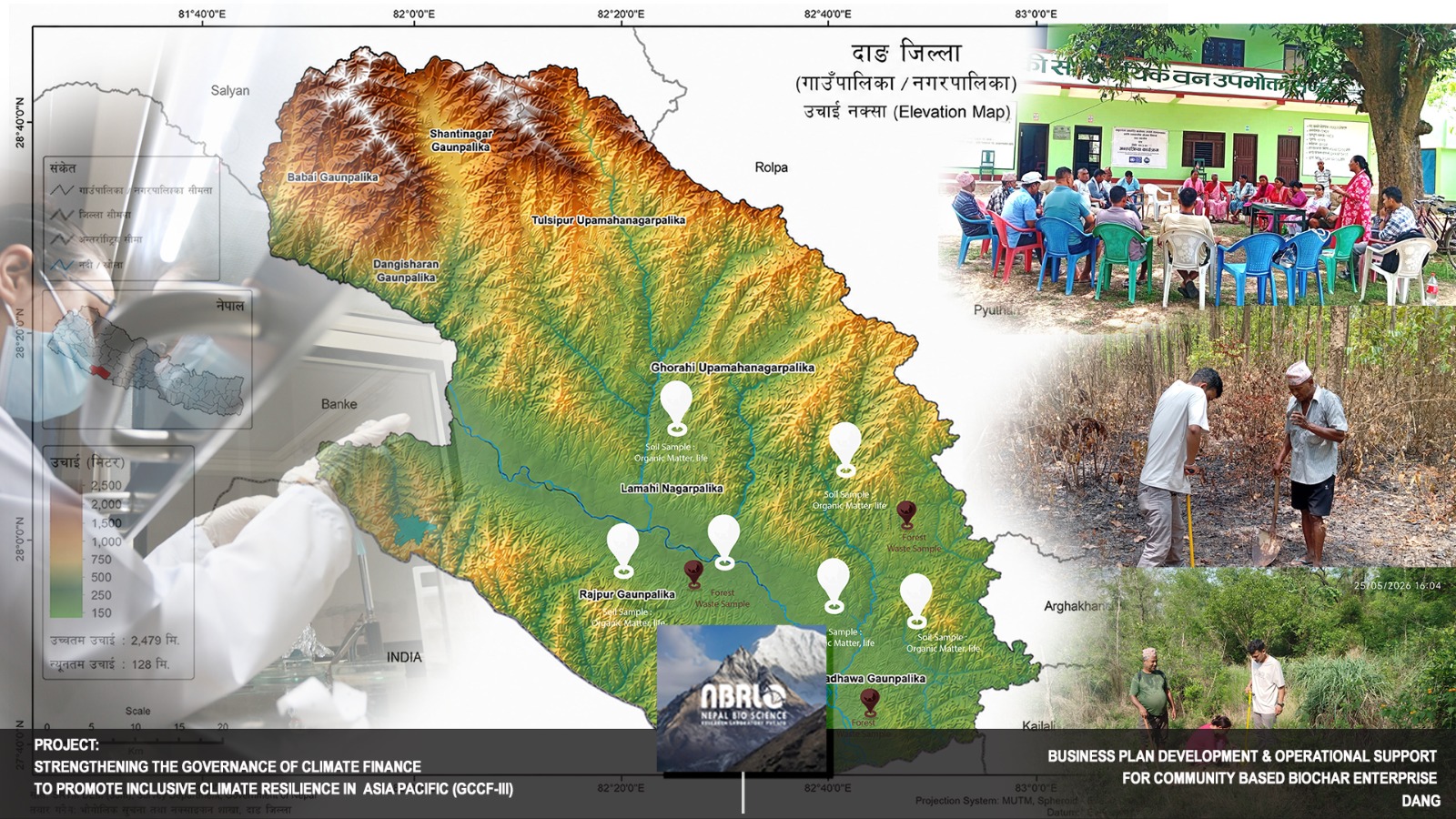
The project was implemented in Lamahi Municipality and Rapti Rural Municipality of Dang District through close collaboration with Community Forest User Groups (CFUGs), local governments, Division Forest Office Dang, Agricultural Knowledge Centre (AKC), FECOFUN, and community stakeholders.
Two proposed biochar production facilities were identified at Karri Community Forest User Group (Lamahi Municipality) and Deuki Community Forest User Group (Rapti Rural Municipality). The enterprises are designed to convert forest residues, leaf litter, invasive species, and agricultural biomass into biochar and carbon-based biofertilizers, reducing wildfire risks while generating local economic opportunities.
Our Impact & Results
🌱 Forest Fire Risk Reduction
- Identified and assessed significant quantities of combustible forest biomass in community forests of Dang.
- Developed sustainable biomass collection and utilization strategies to reduce forest fuel loads and wildfire risks.
- Promoted community-based forest biomass management as a preventive approach to forest fire mitigation.
♻️ Circular Bioeconomy Development
- Designed a community-led biochar enterprise model that converts forest residues into valuable agricultural products.
- Demonstrated how unmanaged biomass can become a resource for income generation, climate action, and sustainable agriculture.
- Established a framework for a circular economy linking forests, agriculture, and local communities.
🌾 Improved Soil Health and Agricultural Productivity
- Promoted biochar and carbon-based biofertilizers enriched with indigenous beneficial microorganisms.
- Increased awareness of soil restoration practices, nutrient retention, moisture conservation, and climate-resilient agriculture.
- Supported alternatives to chemical-intensive farming through locally produced agricultural inputs.
👥 Community Capacity Strengthening
- Conducted 5 Focus Group Discussions (FGDs) involving Community Forest User Groups (CFUGs), farmers, women groups, youth groups, and local stakeholders.
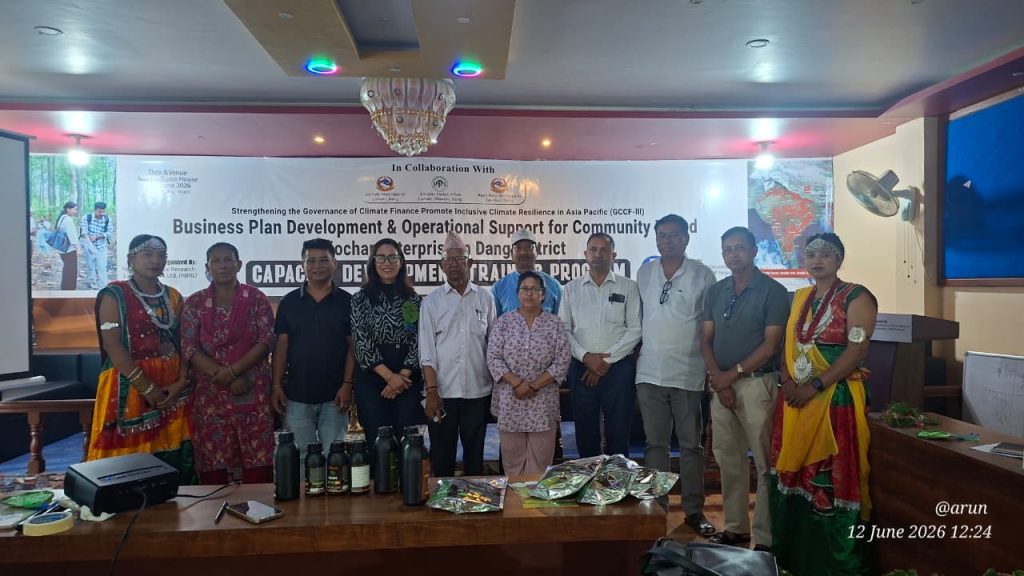
- Organized a two-day Capacity Development Training Program with more than 50 participants from local governments, forest offices, FECOFUN, journalists, and communities.
- Developed local Climate Champions capable of supporting enterprise operation and climate resilience initiatives.
🤝 Multi-Stakeholder Collaboration
- Strengthened partnerships among Lamahi Municipality, Rapti Rural Municipality, Division Forest Office Dang, AKC Dang, FECOFUN, UNDP Nepal, and local communities.
- Facilitated stakeholder consultations to ensure local ownership and sustainability of the proposed enterprises.
- Enhanced coordination between government agencies, community organizations, and technical experts.
💼 Green Jobs and Livelihood Opportunities
- Developed business plans for two community-based biochar enterprises.
- Created pathways for employment in biomass collection, transportation, processing, packaging, and enterprise management.
- Established a foundation for community revenue generation through biochar, carbon-based biofertilizers, and future carbon credit opportunities.
📊 Key Results
- 2 proposed community biochar production facilities identified and assessed.
- 5 Focus Group Discussions completed.
- 1 Capacity Development Training Program successfully conducted.
- Technical Market and Community Capacity Assessment completed.
- Biomass and soil assessments conducted.
- Business plan and operational framework prepared for enterprise implementation.
- Local stakeholder commitment secured for biomass management and enterprise development.
🌍 Long-Term Impact
The project provides a scalable model for transforming forest biomass from a wildfire hazard into a valuable resource that supports climate resilience, carbon sequestration, sustainable agriculture, community livelihoods, and green economic development in Nepal.
“From Forest Fire Risk to Community Prosperity: Turning Biomass into Biochar, Biofertilizer, Jobs, and Climate Action.” 🌱♻️🌍